

Complete Guide to Cockroach Identification and Eradication in Townsville
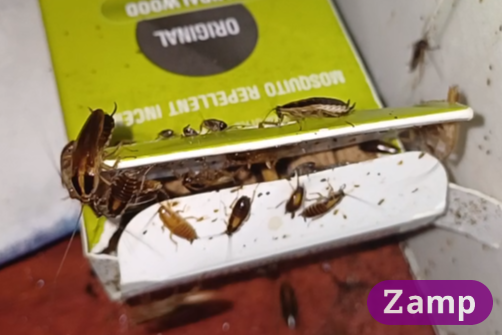
Living in Tropical North Queensland means enjoying warm sunshine, vibrant outdoor spaces, and coastal breezes. However, those exact same environmental conditions create an ideal breeding ground for creeping insects. High atmospheric humidity, frequent summer downpours, and consistently warm temperatures accelerate insect lifecycles, making cockroach control Townsville homeowners require an ongoing priority throughout the year.
Cockroaches are among the most resilient, adaptable, and persistent pests on the planet. They carry pathogenic bacteria, drop allergen-laden faeces, contaminate open food prep surfaces, and multiply at an astonishing rate. A minor issue under a kitchen sink can rapidly evolve into a widespread, entrenched infestation that affects structural wall voids, ceiling spaces, and kitchen joinery.
When you notice crawling insects darting across your kitchen floor at night, quick action is vital. Understanding the specific cockroach species invading your living spaces, recognising early indicators of nesting activity, and applying targeted professional treatments are the foundational steps to reclaiming a safe, hygienic home.
Key Features Section
When protecting your home against stubborn tropical pests, standard off-the-shelf aerosol sprays often fail to solve the underlying problem. Here is what defines an effective, long-lasting cockroach treatment Townsville residents can rely on:
- Species-Specific Eradication Protocols: Customised baiting and spraying techniques formulated specifically for German, American, Australian, and Brown-Banded cockroaches.
- Targeted Gel Baiting Systems: High-palatability, slow-acting gel baits that leverage natural grooming and cannibalistic feeding behaviours to destroy entire harbourages.
- Microencapsulated Residual Applications: Advanced chemical formulations designed to resist degradation caused by North Queensland heat, humidity, and moisture.
- Subfloor and Roof Cavity Dusting: Pressurised insecticidal dust applications into concealed wall voids, roof spaces, and subfloor junctions where sprays cannot safely reach.
- Integrated Environmental Controls: Practical recommendations to seal entry points, eliminate moisture traps, and reduce food attractants around your property.
Understanding Cockroach Species in North Queensland
Not all cockroaches behave the same way or hide in the same areas. Townsville hosts a mixture of native and introduced species, each with unique habitat preferences, breeding cycles, and survival mechanisms. Identifying the exact species in your home is crucial because a treatment strategy that works for large outdoor roaches will often fail completely against small indoor nesters.
German Cockroach (Blattella germanica)
The German cockroach is widely considered the most destructive and difficult indoor pest species in Australia. Unlike outdoor roaches that wander inside accidentally, German cockroaches live almost exclusively indoors alongside human populations.
- Physical Appearance: Adults are relatively small, measuring between 11 mm and 15 mm in length. They are light brown or tan with two distinct, parallel dark stripes running down the pronotum (the shield directly behind the head).
- Habitat Preferences: They prefer warm, dark, high-humidity environments close to food and water sources. Typical harbourages include behind fridges, inside microwave motor housings, beneath kitchen sinks, around dishwasher motors, and inside cabinetry joinery gaps.
- Reproductive Capacity: Female German cockroaches carry their egg capsule (ootheca) attached to their abdomen until just hours before the eggs are ready to hatch. This protects the offspring from environmental hazards and chemical treatments. A single egg capsule can contain between 30 and 40 nymphs, leading to exponential population growth. To understand how rapidly a handful of insects can escalate into a massive problem, you can read our breakdown on how fast cockroach eggs hatch and multiply.
American Cockroach (Periplaneta americana)
The American cockroach is the largest common cockroach species invading homes across North Queensland.
- Physical Appearance: Adults measure between 35 mm and 50 mm in length. They display a reddish-brown colouration with a distinctive pale yellow or yellowish band around the edge of the pronotum.
- Habitat Preferences: These insects thrive in warm, damp, dark environments. They are commonly found in sewer pipes, stormwater drains, subfloors, grease traps, and roof cavities. During hot summer evenings, adults frequently fly through open windows or crawl beneath exterior doors.
- Flight Ability: Unlike German cockroaches, adult American cockroaches possess fully developed wings and are strong flyers.
Australian Cockroach (Periplaneta australasiae)
Despite its common name, the Australian cockroach is an introduced species that has adapted perfectly to coastal Queensland environments.
- Physical Appearance: Very similar in size and shape to the American cockroach, measuring 30 mm to 35 mm long. However, it can be easily distinguished by yellow margin bands along the front edges of its wings and a prominent dark central spot on its pronotum.
- Habitat Preferences: This species prefers outdoor habitats such as garden mulch, compost heaps, beneath tree bark, and around potted plants. They often move indoors into subfloors, wall spaces, and roof cavities seeking shelter during heavy tropical rains or periods of intense summer heat.
Smoky Brown Cockroach (Periplaneta fuliginosa)
- Physical Appearance: Adults measure around 30 mm to 35 mm in length and exhibit a uniform, deep mahogany to dark brown-black colouration with a shiny surface and no yellow markings.
- Habitat Preferences: Smoky brown cockroaches lose moisture rapidly in dry air, so they depend heavily on high-moisture harbourages. They are frequently found in tree hollows, rain gutters filled with leaf debris, palm frond bases, and damp roof voids. They are strongly attracted to outdoor night lighting.
Brown-Banded Cockroach (Supella longipalpa)
Brown-Banded cockroaches present unique challenges because they do not require high levels of moisture.
- Physical Appearance: Small insects measuring 10 mm to 14 mm in length. They feature two light-coloured, transverse bands across their wings and abdomen.
- Habitat Preferences: Because they prefer dry, warm environments, they frequently nest high up in rooms. You might find a brown-banded cockroach in kitchen cabinets, behind wall-mounted picture frames, inside hollow curtain rods, or embedded in furniture, linen and cardboard boxes.
How to Identify a Cockroach Infestation in Your Property
Because cockroaches are nocturnal insects that actively avoid light, seeing live bugs crawling around during the daytime often indicates a large, established population that has run out of hiding space in primary harbourages. Identifying early warning signs allows you to act before the infestation spreads across your entire home.
1. Live and Dead Insect Sightings
Spotting cockroaches during daytime hours is a major red flag. When primary harbourage sites become overcrowded, subordinate insects are forced out into the open to search for food and water. Finding multiple cockroaches near skirting boards, inside cupboards, or behind appliances indicates a thriving population nearby.
2. Droppings and Faecal Smears
Cockroach faeces vary depending on the species present:
- Small Species (German & Brown-Banded): Produce tiny, black, pepper-like droppings or fine specks. These are commonly found concentrated along cabinet door hinges, inside drawer corners, along wall junctions, and around electrical outlets.
- Large Species (American, Australian & Smoky Brown): Produce solid, cylindrical droppings with distinctly ridged sides, measuring up to 2 mm to 3 mm in length. In high-humidity areas like bathrooms or beneath sinks, droppings may appear as dark, irregular liquid smear marks along vertical surfaces.
3. Egg Casings (Oothecae)
Cockroaches do not lay individual soft eggs like flies. Instead, females produce a tough, leathery capsule called an ootheca that protects dozens of embryos inside.
- German Cockroaches: Female German roaches carry their light tan, purse-shaped oothecae until hours before hatching.
- Large Species: American and Australian cockroaches glue their dark brown, capsule-shaped oothecae to protected surfaces such as cabinet undersides, behind skirting boards, or inside corrugated cardboard boxes. Finding empty, hollowed-out egg cases in pantry corners confirms that breeding cycles are actively occurring on the property.
4. Distinct Pungent Odour
As cockroach populations grow, they emit a persistent, sweet, musty, or oily smell. This foul odour stems from aggregation pheromones present in their faeces, shed skins, and glandular secretions. The smell serves to attract other cockroaches to the harbourage. If you notice an unpleasant, lingering scent when opening kitchen drawers or stepping into a subfloor area, a significant harbourage is or has been recently present.
5. Shed Skins (Cuticles)
As juvenile nymphs mature into adults, they pass through several developmental stages (instars). At each stage, they shed their hard outer exoskeleton (cuticle). Finding translucent, amber-coloured shed skins scattered inside cupboards or behind appliances is a definitive sign of active nymph development.
High-Risk Inspection Checklist
When inspecting your home, systematically check these preferred harbourage zones:
- Kitchen Appliances: Behind and beneath refrigerator coils, microwave cooling vents, dishwasher motor housings, and oven bases.
- Cabinetry and Joinery: Cabinet door hinges, underside corners of benchtops, hollow kickboards, and rear panels of pantry shelving.
- Plumbing and Wet Areas: Beneath laundry tubs, around hot water system pipes, floor waste drains, and vanity plumbing penetrations.
- Storage and Paper Products: Corrugated cardboard boxes, stacked paper bags, old newspaper piles, and stored linen cupboards.
Professional Cockroach Treatment Methods and Formulations
Eradicating an entrenched cockroach population requires a combination of targeted chemical formulations, physical barriers, and environmental sanitation. Simply spraying an off-the-shelf aerosol spray directly at a visible roach might kill that single insect, but the harsh repellent chemical can scatter the rest of the colony deeper into your home.
Professional pest control operators use advanced, non-repellent formulations that allow insects to return to their nests unharmed initially, carrying active ingredients back to the main population.
Gel Baits and Targeted Ingestion Technology
Professional gel baiting is one of the most effective methods for eliminating indoor German and Brown-Banded cockroach populations.
- How It Works: Gel baits combine an irresistible food matrix (fats, proteins, and sugars) with a slow-acting active ingredient. Technicians apply precise, pinhead-sized dots of gel directly into active harbourages, cabinet hinges, and appliance joins.
- Secondary and Tertiary Kill: Cockroaches are coprophagous (they consume faeces) and necrophagous (they eat dead colony members). When a cockroach ingests the bait and returns to the nest to die, its contaminated faeces and carcass are consumed by nymphs and other adults. This cascade effect destroys the entire hidden colony, including individuals that never leave the harbourage.
Microencapsulated Residual Sprays
For perimeter protection, subfloors, and large outdoor species, liquid residual applications provide a reliable protective barrier.
- Microencapsulation Advantage: Modern insecticides encapsulate the active ingredient inside microscopic polymer spheres. In high-humidity tropical conditions like Townsville, standard liquid sprays can break down rapidly on porous surfaces. Microencapsulated formulations protect the active ingredient from heat and moisture degradation, ensuring long-term residual activity on concrete, timber, and masonry.
- Non-Repellent Actives: Modern spray formulations are non-repellent to insects. Cockroaches cross treated surfaces without detecting the chemical, picking up microscopic particles on their legs and bodies that are later ingested during routine grooming.
Insect Growth Regulators (IGRs)
Chemical applications are frequently combined with Insect Growth Regulators (IGRs). IGRs mimic juvenile hormones within the insect’s body, preventing immature nymphs from successfully moulting into adults. Even if a nymph survives a low dose of standard insecticide, the IGR renders it sterile or prevents its exoskeleton from hardening properly, effectively shutting down the population’s ability to reproduce.
Insecticidal Dust Applications
Wall voids, subfloors, and ceiling spaces are dry environments where liquid sprays cannot always be safely applied. Licensed technicians use specialised hand-dusters to blow fine, desiccant or insecticidal dusts into these hidden spaces. The dust settles evenly over internal structural timbers, providing residual protection against nesting cockroaches, spiders, and silverfish.
To ensure all applications are carried out safely and effectively, professional pest management practices follow strict guidelines set by peak industry bodies like the Australian Environmental Pest Managers Association.
Treatment Timelines: Duration, Eradication, and Barrier Longevity
Homeowners frequently ask how quickly a treatment takes to perform, when they will see full results, and how long the protective barrier will last against future invaders.
How Long Does an Extermination Service Take?
A thorough professional service for a standard three-to-four-bedroom residential home in Townsville takes approximately 45 to 90 minutes. During this time, the technician conducts a full property assessment to determine appropriate treatment options. They can apply – gel baits inside kitchen and bathroom joinery, dust to roof voids and subfloors, and residual spray around external perimeters, pathways, door frames, and weep holes.
How Long Until Full Eradication?
The timeline for total population elimination depends on the species present, the severity of the initial infestation and the treatment method used.
- Large Outdoor Species (American/Australian): If strong repellent treatments are used by the technician you will notice a dramatic drop in live sightings within 24 to 48 hours. Most adult roaches contacting treated perimeters die quickly. Good control is typically achieved within 7 to 21 days.
- Indoor German Cockroach Infestations: Because gel baits rely on secondary transfer through feeding and grooming, complete eradication takes between 14 and 21 days. This window allows time for newly hatched nymphs to emerge from protected egg casings, consume the bait matrices, and die before reaching reproductive maturity.
How Long Does the Chemical Barrier Last?
Under normal coastal North Queensland conditions, expect professional residual barriers remain active for 3 to 6 months on external perimeters and up to 12 months in protected indoor zones. However, several environmental factors influence chemical longevity:
- Rainfall and Sun Exposure: Heavy summer downpours and intense UV exposure break down external surface barriers faster than protected indoor applications.
- Surface Porosity: Unpainted timber, raw brickwork, and porous concrete absorb liquids faster, slightly reducing top-surface residual contact time compared to smooth, sealed surfaces.
- Indoor Cleaning Practices: Frequent washing of skirting boards with strong chemical detergents or steam mops can strip residual barriers prematurely.
Practical Tips to Prevent Future Cockroach Infestations
While professional chemical barriers eliminate active populations, maintaining good sanitation and structural exclusion habits ensures your property remains unappealing to migrating pests. Adopting long-term preventive measures as outlined in the Queensland Government health guidelines protects both residential and commercial premises.
1. Eliminate Food and Water Sources
Cockroaches enter homes in search of nourishment and moisture. Depriving them of basic necessities forces them to look elsewhere:
- Wipe Down Benches Daily: Remove food crumbs, grease splatters, and liquid spills from kitchen counters, stovetops, and dining tables every evening.
- Store Food in Air-Tight Containers: Transfer cereal, flour, sugar, pet food, and snacks into sealed glass or hard plastic containers rather than relying on flimsy cardboard boxes or soft plastic bags.
- Empty Bins Regularly: Use kitchen rubbish bins with tight-fitting lids and empty them into outdoor wheelie bins every night. Wash out indoor bin liners if liquid spills occur.
- Fix Plumbing Leaks: Repair dripping taps, leaking sink traps, and damp bathroom vanity pipes immediately. Even tiny water droplets satisfy a cockroach’s daily moisture requirement.
- Manage Pet Food Bowls: Do not leave pet food sitting out overnight. Pick up uneaten kibble and empty water bowls before going to bed.
2. Seal Structural Entry Points
Large roaches enter homes through tiny structural gaps around walls, foundations, and joinery:
- Install Door Seals: Fit weather strips or draught excluders along the bottoms of external doors to block entry gaps.
- Mesh Weep Holes: Cover external brick weep holes with stainless steel mesh covers. These allow essential structural ventilation while preventing large American and Australian roaches from entering wall cavities.
- Seal Pipe Penetrations: Use silicone sealant or expanding foam to plug gaps around plumbing pipes entering through kitchen walls, bathroom vanities, and laundry tubs.
3. Maintain Indoor Air Conditioning Units
In Tropical Queensland, air conditioning units operate constantly throughout warm months. Drip trays and condensation drain lines create moist harbourage zones that attract insects. Clean filters regularly and check out signs your aircon needs a deep clean to ensure internal components do not become damp pest havens.
By adopting these habits alongside general residential pest control treatments, you create an uninviting environment for creeping insects. You can also explore our practical recommendations on eco-friendly ways to keep pests away for additional home maintenance advice.
Protect Your Property: Book Your Townsville Treatment Today
Cockroaches are more than just a nuisance; they pose genuine health risks to your family by contaminating food surfaces and spreading bacteria throughout your living areas. Delaying action allows breeding colonies to multiply exponentially, making eventual elimination more difficult and costly.
At Zamp Pest Control, our experienced technicians understand the unique challenges of tropical pest management. We deliver safe, thorough, and highly effective treatments across all Townsville service locations. Whether you are dealing with a sudden outbreak of large flying roaches or a persistent German cockroach issue in your kitchen, we have the expertise to restore peace of mind to your home.
Take action today to secure your property against unwanted pests. Access our simple online booking system to schedule a service time or contact our experienced team directly for expert advice and assistance.
Frequently Asked Questions
What attracts cockroaches to homes in Townsville?
Townsville’s warm, humid climate offers ideal living conditions for cockroaches. Homes attract them by providing easy access to moisture (dripping taps, aircon condensation, damp sinks), food sources (crumbs, unsealed pantry goods, pet food, grease behind ovens), and sheltered harbourage zones (subfloors, roof voids, cardboard boxes, food in couches).
Are cockroach treatments safe for my children and household pets?
Yes. Modern professional pest management uses low-toxicity, targeted formulations applied specifically into concealed cracks, joinery hinges, and wall voids where children and pets cannot touch them. Liquid surface applications are safe once completely dry, which typically takes one to two hours following application.
Why am I seeing more cockroaches after a professional treatment?
It is very common to see increased cockroach activity for the first 3 to 7 days after a treatment. The applied products irritate hidden insects and disrupt their nervous systems, forcing them out of dark harbourages during the day as they die. Seeing slow-moving or disoriented roaches in the open is proof that the treatment is working effectively.
How often should I get professional cockroach control townsville services?
For most residential properties in North Queensland, an annual general pest treatment provides reliable, year-round protection against cockroaches, spiders, and silverfish. However, commercial kitchens, food businesses, or properties with recurring German cockroach issues may require quarterly or bi-monthly preventative visits to maintain strict hygiene standards.
Do I need to empty all my kitchen cupboards before the technician arrives?
For general preventive treatments targeting large roaches, you usually do not need to empty cupboards. However, if you have an active German cockroach infestation, your technician may request that you clear out kitchen cupboards and pantries so gel baits and crack-and-crevice treatments can be applied directly to internal joinery corners and hinges.